May 18, 2026
Key Highlights:
● Luxury cars often carry hidden maintenance costs beyond depreciation.
● Proprietary parts can cost 3–5 times more than standard vehicle components.
● Specialized labor requirements increase service fees at authorized dealerships.
● Even routine maintenance can be unexpectedly expensive for premium brands.
● Understanding these costs helps buyers make informed decisions before purchase.
Estimated Reading Time: 8 minutes┃Post by: Daniel Crosswell
Luxury Vehicle Maintenance: More Than Just a Price Tag
When considering a luxury car purchase, most buyers focus on performance, style, and brand prestige. What’s often overlooked is the ongoing cost of maintenance, which can eclipse the initial depreciation loss over time. Unlike standard vehicles, premium cars rely heavily on proprietary components, high-grade materials, and specialized service protocols. These factors make routine maintenance far more expensive and complex than it appears at first glance.
To illustrate, consider a 2022 Mercedes-Benz E-Class. While its MSRP might be $55,000, a typical first-year maintenance plan can reach $1,200—already double what a comparable Toyota Camry would cost. Beyond routine oil changes and tire rotations, replacing a worn brake caliper or air suspension component often involves parts that are exclusively available through the dealership, accompanied by labor fees charged by technicians trained specifically on that model.
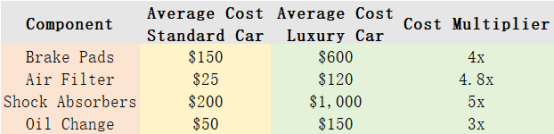
In real-life scenarios, these costs compound rapidly. A friend of mine who owns a 2019 Porsche Macan reported spending nearly $3,500 on scheduled maintenance in a single year, which included tire replacements, a brake fluid flush, and minor software updates. Meanwhile, a similarly aged Honda CR-V would have cost under $800 for the same period.
Luxury manufacturers also frequently employ advanced electronics and complex hybrid systems. These systems require diagnostic tools that are often only available to authorized service centers. Even a minor software update for an infotainment or ADAS (Advanced Driver Assistance System) feature can require a service appointment costing several hundred dollars, adding another layer to the ownership expense.
Specialized Parts and Labor: The Hidden Premium
The need for specialized parts is at the heart of the higher costs associated with luxury vehicles. Many components—ranging from suspension links to engine internals—are designed specifically for each model and cannot be substituted with generic equivalents. The proprietary nature of these parts ensures brand consistency and performance standards but significantly increases both the parts cost and service fees.

Labor is equally specialized. Technicians at luxury dealerships undergo rigorous training to handle model-specific systems, from turbocharged engines to adaptive suspensions. These skills justify higher hourly labor rates, often exceeding $200 per hour, compared with $100 per hour for standard automotive services. In combination with premium parts, even minor repairs can quickly escalate into thousands of dollars.
Consider a scenario with an Audi A6 requiring a timing belt replacement. For a standard vehicle, this might cost $600–$900, whereas the luxury variant’s part alone could be $1,200, with labor pushing the total to $2,800. Beyond these obvious examples, small but frequent items—like cabin air filters, brake fluids, and tire rotations—compound costs over a vehicle’s lifetime.
Maintenance frequency also plays a role. Luxury cars often have stricter service intervals dictated by performance optimization needs. Skipping a scheduled service, even by a few months, can void warranties or lead to component failure, ultimately resulting in higher repair costs. In real terms, this means owners cannot take a “do-it-yourself” approach easily, unlike standard vehicles where some maintenance can be safely deferred or completed at independent shops.
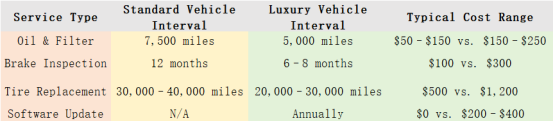
These figures emphasize that the ownership cost of a luxury car is not simply tied to purchase price or resale depreciation; ongoing maintenance significantly impacts long-term expenses. Understanding these costs upfront allows prospective buyers to budget realistically and avoid unwelcome surprises.
The Hidden Costs Behind Luxury Vehicle Ownership
While the sticker price and depreciation of luxury cars often dominate purchase discussions, several less obvious costs make owning a premium vehicle uniquely expensive. These factors include insurance premiums, software subscription fees, specialized diagnostics, and even fuel efficiency challenges.
Insurance and Risk Factors
Luxury cars tend to carry higher insurance premiums due to several factors: high replacement costs, expensive parts, advanced electronics, and historically higher accident repair rates. For example, a BMW 7 Series owner might pay $2,500–$3,000 annually in insurance, while a similar-aged Honda Accord might cost less than $1,200. Insurers consider repair complexity and parts availability when pricing policies, meaning the very features that make a car “luxury” also make it costly to insure.
Proprietary Software and Subscriptions
Modern luxury vehicles are increasingly “software-defined.” Features such as adaptive cruise control, lane-keeping assistance, advanced navigation, and even heated or ventilated seats may require subscription models. Tesla, Mercedes, and BMW now offer upgrades or premium features via software subscriptions, which can cost hundreds of dollars per year. This hidden expense is often overlooked during initial purchase considerations but accumulates significantly over the vehicle’s lifecycle.
Fuel Consumption and Specialty Fuel
Many high-performance engines in luxury cars are designed to run on premium-grade gasoline. Using lower-octane fuel can reduce performance or even damage the engine, meaning routine fueling can be 20–40% more expensive than standard vehicles. Additionally, high-performance engines often have lower fuel efficiency, further increasing operational costs. For example, a 2023 Audi S6 averages around 20 MPG combined, compared to 30–32 MPG for a mid-sized sedan like a Toyota Camry.
Specialized Tires and Wheel Maintenance
Luxury cars often use large wheels with low-profile tires, which deliver better handling and aesthetics but are more prone to damage and cost significantly more to replace. A single OEM tire for a Porsche 911 or Jaguar F-Type can cost $400–$600, not including installation and balancing. Alloy wheels can also be damaged by curb impacts, requiring expensive refinishing or replacement.
Extended Warranties and Prepaid Maintenance Plans
Many luxury owners purchase extended warranties or prepaid maintenance plans to mitigate future costs. While these plans provide peace of mind, they also represent an upfront financial commitment that must be evaluated carefully. Plans typically cover scheduled maintenance and certain mechanical failures but may exclude software-related updates or high-performance component replacements, leaving gaps in coverage.
Real-Life Case Study
Consider a 2021 Mercedes-AMG C63 S. Beyond the $70,000 purchase price, the first three years of ownership might include:

Total: $19,800 over 3 years, not including fuel or unexpected repairs—a figure almost one-third the original purchase price.
Luxury car ownership is not only about prestige or performance—it’s about financial foresight. Hidden expenses such as insurance, software subscriptions, specialty fuel, tires, and depreciation linked to maintenance history can substantially impact the total cost of ownership. Buyers who understand these factors are better prepared to enjoy their vehicles without unpleasant financial surprises.
(The information provided in this article is based on publicly available data, industry reports, and real-world ownership experiences. Actual maintenance costs may vary depending on geographic location, service provider, and specific vehicle condition.)
FQAs
Q1: Can luxury car owners reduce maintenance costs by using aftermarket parts?
A1: While some non-OEM parts may be compatible, many luxury car warranties require proprietary components. Using aftermarket parts may void warranties and lead to additional costs.
Q2: Are luxury cars more reliable despite higher maintenance costs?
A2: Generally, luxury cars are built with higher-quality materials, but complex systems mean that when failures occur, repairs are expensive. Reliability can vary by brand and model year.
Q3: Is independent servicing an option for luxury vehicles?
A3: Some independent shops specialize in premium brands and can offer lower rates. However, not all shops have access to specialized diagnostics, which may be required for certain repairs.
About Author
Daniel Crosswell is an automotive journalist with over 12 years of experience covering the luxury car market. He has personally tested and maintained multiple high-end vehicles, giving him unique insights into the hidden costs and realities of premium ownership.
References
[1] Automotive News. (2025). Luxury car maintenance costs rise: Why brands like Mercedes and BMW charge more.
[2] Kelley Blue Book. (2024). The real cost of owning a luxury vehicle.
[3] Consumer Reports. (2023). Luxury car maintenance: What owners need to know.
Explore more of our automotive insights to stay ahead in understanding vehicle ownership beyond the showroom.
Recommend:

How Insurance and Taxes Impact Your Real Car Costs Over Time

What Your Commute Reveals About Your Driving Needs?

The Impact of Financial Pressures on Car Ownership and the Trend Toward Longer Vehicle Lifespans

Hidden Costs of Car Ownership That Impact Your Long-Term Budget